What the Dinner Table Already Knows: How Vietnamese-American Parents Teach Without Ever Starting a Lesson
The Lesson Nobody Announces
On a Saturday morning in San Jose, Linh Trần is not teaching her nine-year-old daughter anything. At least, not officially. She's just running errands — a stop at the Asian grocery on Story Road, a quick visit to drop off soup for an elderly neighbor down the street, a detour to pick up a younger cousin who needs a ride to soccer practice. Her daughter, Mia, is in the back seat, earbuds half in, watching everything.
By the time they get home, Mia has absorbed something no worksheet could have delivered: that you check on people. That community isn't a concept — it's a Tuesday. That showing up, even when it's inconvenient, is just what you do.
"I never sat her down and said 'here's what it means to be Vietnamese,'" Linh says, laughing a little. "But I think she knows more than I give her credit for."
This is the invisible curriculum — the set of values, habits, and ways of moving through the world that Vietnamese-American parents pass down not through formal conversation, but through the texture of ordinary life. And researchers, educators, and families themselves are starting to pay closer attention to just how powerful it is.
Resilience, Served Daily
Ask most Vietnamese-American parents what they most want their kids to understand, and the word resilience comes up fast. But almost none of them teach it directly. Instead, it shows up sideways.
In Houston, Khôi Nguyễn runs a small auto repair shop and brings his teenage son Bảo in most weekends. Bảo isn't there to learn car mechanics — he's there to watch his father handle a difficult customer without losing his cool, to see how Khôi problem-solves when a part doesn't arrive on time, to notice that his dad eats lunch in fifteen minutes and gets back to work without complaint.
"My father did the same thing with me," Khôi says. "I didn't understand it then. Now I do. You learn how to handle hard things by watching someone handle hard things."
This kind of modeling — what psychologists sometimes call observational learning — is deeply embedded in Vietnamese parenting culture, even when parents don't have a name for it. The goal isn't to explain difficulty. It's to normalize it, to let kids witness that setbacks are just part of the landscape, not signs that something has gone terribly wrong.
Respect That Lives in the Body
For many Vietnamese-American families, respect for elders isn't a value you explain — it's one you practice until it becomes reflex. The two-handed offering of a cup of tea. The slight bow of the head when greeting someone older. The silence you keep when adults are speaking, not because you're excluded, but because you're learning to listen before you lead.
Thùy Phạm, a mother of three in the DC metro area, says she notices how differently her kids behave at her mother's house versus everywhere else. "At Bà Ngoại's, they automatically code-switch. They're quieter, more attentive. They clear the dishes without being asked. And I didn't teach them that explicitly — it just absorbed into them from being around her."
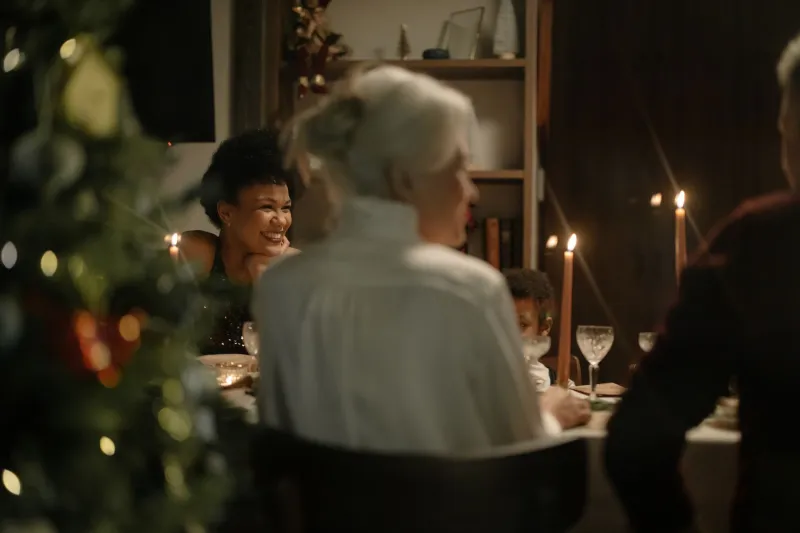
That absorption is intentional, even if it's subtle. Many Vietnamese-American parents make deliberate choices to keep grandparents close and visible in daily life — regular Sunday dinners, FaceTime calls with relatives back in Vietnam, holidays that center the oldest generation rather than the youngest. The message, delivered without a single lecture: the people who came before you matter. Their presence is not optional.
Entrepreneurial Thinking as a Second Language
There's a reason so many Vietnamese-American kids grow up comfortable with the idea of building something from scratch. They watched it happen.
In the back of a nail salon in Atlanta, a twelve-year-old named Sophie does her homework at a folding table while her parents work. She's been doing this since she was old enough to sit still. She knows the names of the regulars. She's watched her mother upsell a gel manicure, heard her father calculate supply costs in his head, seen them both stay two hours past closing on a busy Friday.
Her mom, Hương, doesn't frame any of this as a business lesson. "I just need her close," she says simply. But Sophie, when asked what she wants to do when she grows up, says she wants to "run something." She doesn't know exactly what yet. She just knows it's possible.
This is the entrepreneurial thinking that gets passed down in Vietnamese-American families — not as ambition exactly, but as a baseline assumption that self-reliance is available to you, that you don't have to wait for permission to build.
The Obligation Nobody Opted Into
Maybe the trickiest value to transmit — and the one that creates the most generational friction — is the sense of community obligation. The idea that your success isn't entirely yours. That you owe something to the people around you, to the family that sacrificed, to the community that held you up.
For many second-generation Vietnamese-Americans, this felt like pressure growing up. Now, as parents themselves, some are finding ways to reframe it.
"I don't want my kids to feel guilty for succeeding," says Minh Lê, a software engineer in Seattle and father of two. "But I do want them to feel connected. There's a difference." He and his wife make a point of volunteering together at their local Vietnamese community center, of donating to the scholarship fund that helped Minh get through college, of telling their kids — directly and often — the names of the people who helped them along the way.
"We're not teaching them debt," he says. "We're teaching them that they're part of something bigger than themselves. And that's actually a gift."
The Power of the Unscripted Moment
What strikes researchers and educators who study immigrant family dynamics is that the most durable cultural transmission often happens in exactly these unscripted moments — the car rides, the errand runs, the long Sunday meals where nobody is technically teaching anything.
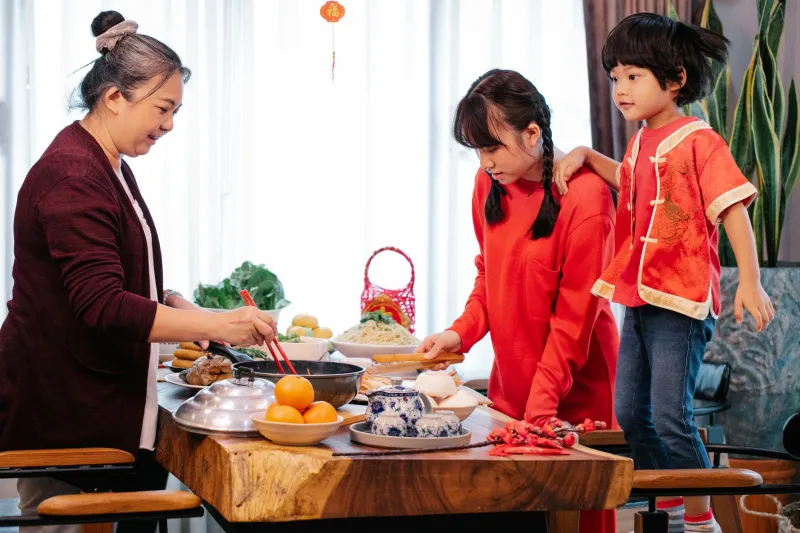
Formal heritage programs matter. Vietnamese language school matters. Tết celebrations matter. But the values that stick deepest tend to be the ones that arrive without announcement, embedded in how a parent handles a hard phone call, how they treat a stranger, how they talk about money, how they show up for people they don't have to show up for.
Linh Trần's daughter Mia, back in San Jose, probably couldn't tell you what she learned last Saturday. But somewhere in her, the lesson is already taking root — quiet, ungraded, and entirely her own.
That's the invisible curriculum. And in Vietnamese-American households across the country, it's running every single day.