Roots in American Soil: The Vietnamese-American Home Gardens That Carry a Whole World Inside Them
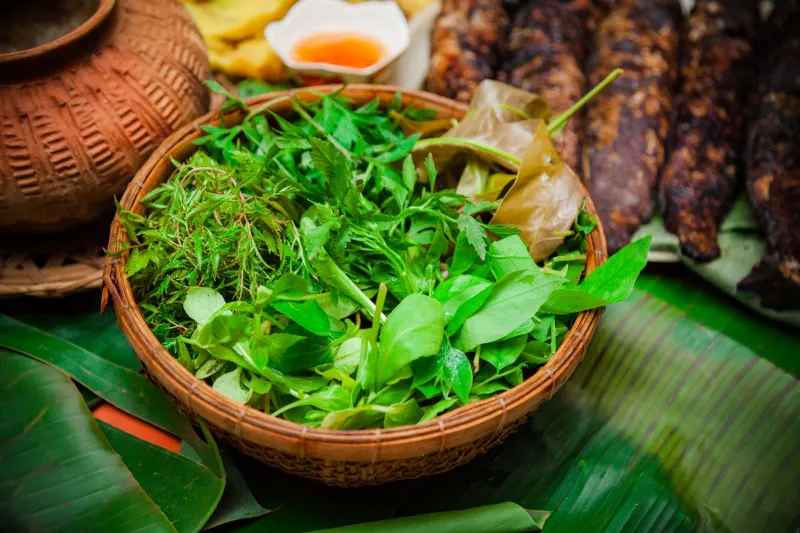
Somewhere in a San Jose backyard, a seventy-two-year-old grandmother is crouched between raised beds, pinching off the tips of her rau muống like she's done since she was a girl in Huế. Three feet away, her teenage granddaughter is on her phone — but every few minutes, she glances over, watching. She might not realize it yet, but she's learning something.
That's the thing about these gardens. They don't announce themselves. They don't hang signs or write mission statements. They just grow, quietly and stubbornly, in the corners of Vietnamese-American life all across this country.
More Than a Hobby, More Than a Grocery Hack
Walk through any neighborhood with a dense Vietnamese-American population — Little Saigon in Westminster, California; Bolger Heights in Houston; Eden Center's surrounding streets in Falls Church, Virginia — and you'll start to notice them. Narrow side yards packed with lemongrass. Apartment balconies draped in bitter melon vines. Five-gallon buckets of perilla crowding a concrete stoop. Community garden plots claimed by aunties who show up at dawn.
For many Vietnamese-American families, especially those who arrived as refugees in the late 1970s and '80s, growing food was never optional. It was practical. Asian grocery stores weren't everywhere back then, and even now, the specific herbs that make a bowl of bún bò Huế taste right — the sawtooth herb, the banana blossom, the fresh turmeric — aren't always easy to find or cheap to buy. So families grew their own.
But call it purely economic and you're missing most of the story.
"When I plant rau răm, I'm not thinking about saving money," says Linh T., a 58-year-old woman in Garland, Texas, who tends a sprawling backyard garden she started the year she became a citizen. "I'm thinking about my mother. I'm thinking about the smell of her kitchen. It's the same smell now in my yard."
The Plants That Made the Journey
Some of these gardens carry histories that are almost impossible to fully articulate. Seeds and cuttings have been passed between families, tucked into luggage, propagated from a single stem that crossed an ocean. There are Vietnamese-American gardeners who can trace a particular variety of bitter melon or a specific strain of Vietnamese coriander back to a relative, a province, a life that no longer exists in the same form.
This kind of botanical lineage is its own form of documentation. No photographs, no official records — just a plant that keeps growing, kept alive by someone who remembered.
In Orange County, a community gardening group that formed informally among older Vietnamese women has become a de facto seed library. Members trade starts and cuttings at gatherings that look, from the outside, like any other neighborhood get-together. But the conversation over those exchanges is dense with memory: this is how my grandmother grew it, this variety doesn't do well in clay soil, you have to harvest before it gets too bitter.
Knowledge that took generations to accumulate, passed along over a folding table in a church parking lot.
What the Kids Are Actually Absorbing
Parents and grandparents often worry that second-generation and 1.5-generation Vietnamese-Americans are losing touch with the culture. Language slips. Traditions get simplified. The food gets adapted. And yeah, some of that is real.
But gardens have a sneaky way of keeping things alive.
Mia Nguyễn, a 24-year-old in the Seattle area who grew up watching her dad tend a modest herb patch in their backyard, admits she didn't care much about it as a kid. "It was just, like, dad's thing. Kind of embarrassing, honestly — all these random plants everywhere."
Then she moved into her first apartment. And she bought a pot of tía tô from the Asian market. And she started growing it on her windowsill. And one day she called her dad to ask why her leaves were turning pale.
"We talked for an hour," she says, laughing a little. "About soil pH, about how much sun it needs, about how he used to grow it back home. He was so happy. I didn't even realize I'd been missing that."
This is how intergenerational transfer actually happens — not always through formal lessons or deliberate preservation efforts, but through the slow accumulation of small moments. A question about a plant. A shared afternoon in the dirt. A recipe that requires something you can only get from your own backyard.
Medicinal Roots, Practical Wisdom
Vietnamese home gardens often blur the line between food and medicine in ways that reflect a holistic approach to wellness that predates modern pharmacy by centuries. Lá lốt for joint pain. Gừng — ginger — for digestion and nausea. Sả, lemongrass, as both culinary staple and natural mosquito deterrent. Bitter melon, which shows up constantly in these gardens, has long been used in traditional Vietnamese medicine for blood sugar regulation.
For older Vietnamese-Americans who may face language or financial barriers to conventional healthcare, these plants aren't just cultural artifacts — they're a functioning part of how families take care of each other.
"My mother-in-law doesn't trust doctors much," one woman in Houston confides. "But she trusts her garden. She knows what every plant does. Honestly? Sometimes I think she's right."
This isn't anti-medicine. It's a parallel system of knowledge, one that has survived displacement and diaspora because it lives in the hands and memory of the people who carry it.
Small Plots, Big Statements
There's something quietly radical about a Vietnamese-American grandmother growing rau muống in a climate that's nothing like the Mekong Delta. It requires adaptation — different soil amendments, grow lights for apartments, container gardening techniques learned from YouTube videos in Vietnamese. It requires stubbornness. It requires love.
And it says something. It says: we are still here, we still know who we are, and we are going to keep growing the things that remind us of that.
At Làng Ơn Pô, we think a lot about what it means to celebrate Vietnamese heritage in America — not just the big cultural moments, the Tết festivals and the bánh mì shops that make the news, but the small daily acts that hold a community together. A garden is one of those acts. It's not flashy. It doesn't trend on Instagram (well, sometimes it does, but that's beside the point).
It's just roots, going down into American soil, finding a way to hold.
And every season, it comes back.