Two Worlds, One Table: How Vietnamese-Americans Navigate the Social Rules Nobody Writes Down
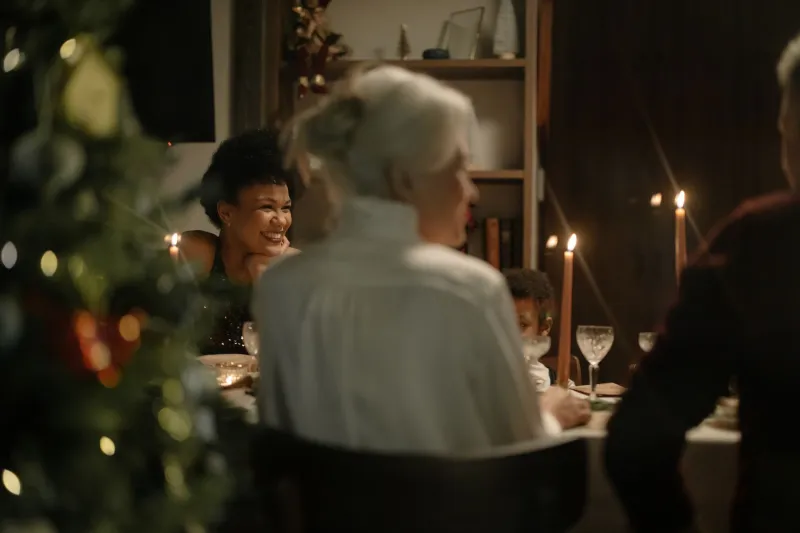
My Linh Trần still laughs about the first time she brought her college roommate home for Thanksgiving. Her mom immediately pushed a plate of food toward the guest before she'd even sat down, refilled her water glass twice without asking, and kept insisting she eat more long after the roommate said she was full. "My roommate thought my mom was being pushy," My Linh says. "I knew she was being the most loving version of herself she knew how to be."
That gap — between what's happening and what someone else thinks is happening — is where a lot of Vietnamese-Americans live. Not just during the holidays. Every day, at work, at school, at the dinner table with friends who didn't grow up the same way.
The social rulebook Vietnamese-Americans carry is detailed, layered, and largely invisible to outsiders. And navigating two of these rulebooks at once? That's its own kind of skill.
The Greeting That Starts Everything
Let's start at the door, because that's literally where it begins.
In Vietnamese culture, how you greet someone tells them everything about who you are and how you see them. You don't just say hi — you acknowledge the relationship. You use the right pronoun. You might bow slightly, offer both hands, or wait for an elder to extend theirs first. There's a whole social architecture built into a five-second hello.
Then you walk into an American office party and someone's already going in for a hug.
Thành Nguyễn, a project manager in Houston, says he spent years feeling like he was constantly recalibrating. "In Vietnamese settings, I know exactly what to do. I know who to greet first, how to address them, when to speak and when to listen. In American professional settings, it felt like everyone was improvising and I just hadn't read that script."
What he eventually figured out — and what a lot of Vietnamese-Americans describe — is that the goal isn't to pick one script and stick with it. It's to read the room fast and switch fluidly. Not fake it. Just translate.
Gift-Giving and the Art of the Refusal
Here's one that trips up non-Vietnamese guests constantly: you're not supposed to immediately accept a gift.
In Vietnamese etiquette, refusing something once (or twice) before accepting is a sign of humility and respect. It's not actually a no. It's a "I don't want to seem greedy, but yes, thank you." The person offering knows this. The person receiving knows this. Everyone's playing the same polite game.
Bring that custom into an American context and suddenly you're the person who "doesn't want" the birthday present, or worse, the coworker who keeps saying "oh no, you didn't have to" until your boss gets genuinely confused about whether to put the gift card back.
Lan Phạm, a nurse in Orange County, says she's learned to adjust — but not abandon — this instinct. "I still do the little hesitation. It's in me. But I've learned to make it shorter when I'm around people who don't share that background. One small 'oh, you didn't have to' and then I receive it gracefully. I'm not losing the value — I'm just translating the gesture."
On the flip side, Vietnamese-Americans often bring gifts to gatherings in ways that surprise American friends. Showing up to a dinner party with fruit, a box of bánh, or something for the host's parents (if they're present) isn't over-the-top — it's just how you show you were raised right.
Directness, Indirectness, and the Space Between
One of the biggest friction points in cross-cultural settings is communication style. American professional culture — especially in certain industries — puts a high premium on directness. Say what you mean. Speak up in meetings. Advocate for yourself loudly.
Vietnamese communication, particularly in hierarchical or family settings, often runs differently. Disagreement gets softened. Criticism comes wrapped. Silence can mean disapproval just as much as words can. And speaking too boldly in front of elders or authority figures can read as disrespectful, even if you're completely right.
Hiếu Lê, who works in tech in the Bay Area, says this was the hardest thing to reconcile. "I'd been taught my whole life that speaking over someone older than you, or pushing back on your boss too hard, was a sign of bad character. Then I get into these sprint planning meetings and everyone's interrupting each other and I'm just sitting there thinking, 'I have things to say but this is not how I was raised to say them.'"
He eventually found a middle path: being assertive in writing, asking for space to present fully rather than debate in real time, and choosing moments to speak up rather than performing the kind of loud confidence that doesn't come naturally. "I'm not less direct. I'm just direct in a way that still feels like me."
Dining Together — and What It Actually Means
Food is where Vietnamese social customs are maybe the most visible — and the most misunderstood.
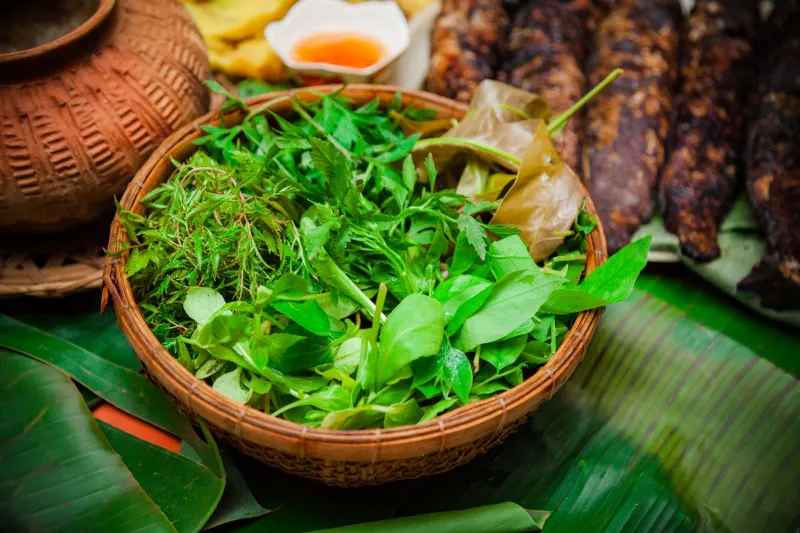
Serving others before yourself isn't just politeness. It's a whole value system. Elders eat first. You offer before you take. You don't just fill your own bowl and start eating while someone's still standing. And when someone keeps putting food in your bowl even after you've said you're fine? That's not ignoring your answer. That's love.
American dining culture, especially in casual settings, tends toward individual autonomy. You serve yourself. You stop when you're done. "No thanks" means no.
My Linh, from the opening story, now hosts her own dinner parties — mixing Vietnamese and non-Vietnamese friends — and she's found a way to make both worlds feel welcome. "I still serve people. I still refill glasses. But I explain it now. I'll say, 'This is how I was raised — let me take care of you tonight.' People love it once they understand what it means. It's not pressure. It's hospitality."
That reframing — context as a gift — shows up again and again in conversations with Vietnamese-Americans who've found their footing in cross-cultural spaces.
Code-Switching Without Losing the Code
The phrase "code-switching" gets used a lot, but what Vietnamese-Americans are often doing is something more nuanced than flipping a switch. It's more like holding two frequencies at once and knowing which one to turn up depending on who's in the room.
The people who seem to navigate it best aren't the ones who've abandoned their Vietnamese social instincts in favor of American ones — or vice versa. They're the ones who've gotten comfortable explaining themselves. Who've learned to say, "In my family, this is how we show we care," without apology and without over-explaining.
Thành puts it plainly: "I used to feel embarrassed when my cultural habits showed in American spaces. Now I think of them as things I can share. Most people are curious, not judgmental. They just didn't know."
That shift — from hiding to sharing — might be the real skill. Not mastering two rulebooks, but being willing to let people see the one you started with.
Because the truth is, a lot of what Vietnamese etiquette is built on — respect for elders, care for guests, humility in receiving, generosity in giving — those aren't niche cultural quirks. They're values a lot of people recognize when they see them. They just might not have seen them dressed this way before.
And maybe that's the whole point of the table: to let people in close enough to understand.