The Quiet Builders: Meet the Vietnamese-American Community Pillars Doing the Work No One Sees
If you ask Linh Phạm what she does, she'll probably say something modest. "I just help out at the center." What she won't mention — unless you press her — is that she has spent the last eleven years running a free Vietnamese language program out of a community center in Houston's Midtown neighborhood, teaching weekend classes to over three hundred kids, coordinating volunteers, writing grant applications in her spare time, and doing all of it while holding down a full-time job as a medical interpreter.
Linh is not an anomaly. She's a type — one that exists in nearly every city with a significant Vietnamese-American population, and one that almost never gets written about.
This is an attempt to fix that.
The Infrastructure Nobody Talks About
When people talk about Vietnamese-American cultural preservation, the conversation often gravitates toward the visible: festivals, restaurants, fashion, art. These things matter. But underneath them is an entire layer of infrastructure — programs, institutions, relationships, networks — that makes the visible stuff possible. And that infrastructure is almost entirely built and maintained by people who aren't doing it for recognition.
Think about who actually keeps a Vietnamese community center running. Someone books the rooms, manages the calendar, coordinates with city officials, recruits volunteers, mediates disputes, and makes sure the lights stay on — figuratively and literally. That person is often a volunteer, or someone paid so little it might as well be volunteering.
In cities like San Jose, New Orleans, Philadelphia, and Minneapolis — all home to significant Vietnamese-American communities — these quiet builders are the connective tissue between generations and between the community and the broader American city around it.
Teaching the Language, Holding the Line
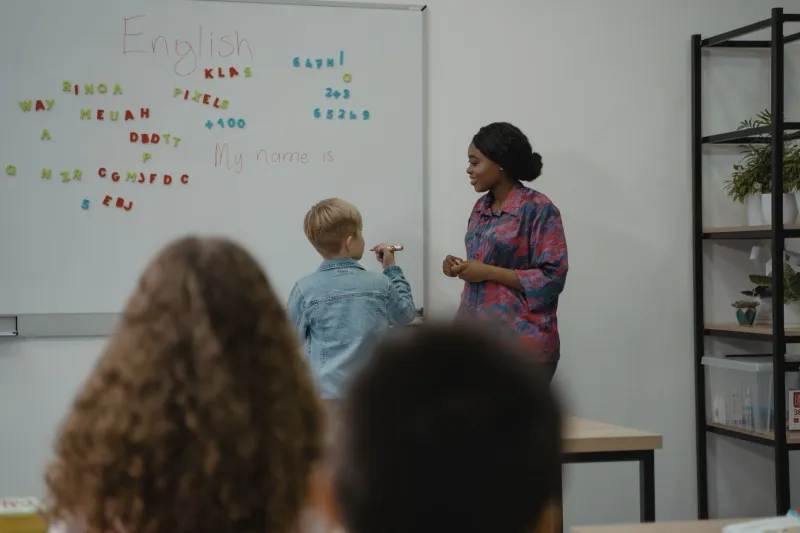
Vietnamese language education in the US is a story of persistent, grassroots effort. Unlike some immigrant communities with strong institutional backing, Vietnamese-language schooling in America has largely been built from the ground up — by parents, community members, and educators who saw a need and decided to fill it.
Hoàng Minh, who teaches at a Vietnamese heritage school affiliated with a Buddhist temple in Orange County, has been doing this work for over two decades. He's not a credentialed educator by American standards. He's a retired engineer who learned to teach because someone had to.
"When I started, there were maybe twenty kids," he says. "Now we have over a hundred. Most of them are third-generation. Their parents barely speak Vietnamese. But they come." He pauses. "That means something."
What keeps him going isn't a salary — there isn't one. It's the accumulation of small moments. A student who texts him years later from college to say they used their Vietnamese skills on a trip to visit family in Đà Nẵng. A kid who was struggling and then suddenly, one day, started reading aloud with confidence.
Mutual Aid as Cultural Practice
Long before "mutual aid" became a widely used phrase in American civic discourse, Vietnamese-American communities were practicing it — rooted in both necessity and cultural values around collective responsibility.
In cities like New Orleans, where a tight-knit Vietnamese-American community in the Village de l'Est neighborhood famously organized after Hurricane Katrina with remarkable speed and cohesion, the networks that made that response possible didn't appear overnight. They were built over decades by community leaders, temple associations, and neighborhood organizations that had been quietly doing the work of connection and support.
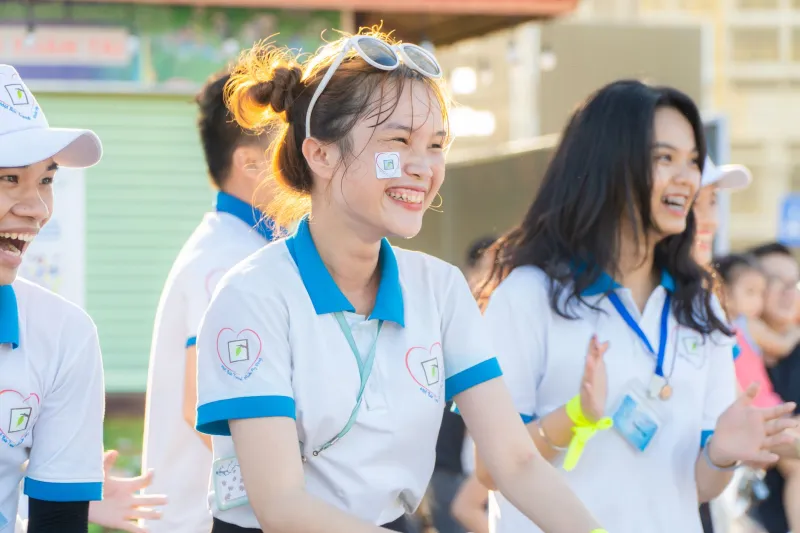
Simi Trần coordinates a mutual aid network in the Dallas–Fort Worth area that helps newly arrived Vietnamese immigrants navigate everything from healthcare access to employment paperwork. She started it during the pandemic when she noticed gaps that existing services weren't filling.
"There were people who didn't know where to get food. Elderly folks who couldn't figure out the vaccine sign-up websites," she says. "We just started making calls. It grew from there." The network now has over sixty active volunteers and has assisted more than four hundred families.
Simi has no social media presence for the organization. "I've thought about it," she admits. "But honestly, word of mouth works better for our community. People trust people they know."
The Temple as Community Hub
For many Vietnamese-Americans, the Buddhist temple or Catholic parish isn't just a place of worship — it's a community center, a social safety net, a cultural archive, and a gathering place all at once. And the people who keep those institutions functioning are doing some of the most sustained, least-recognized cultural work in the country.
At a Vietnamese Buddhist temple in the San Gabriel Valley east of Los Angeles, a group of women — most of them in their sixties and seventies — gather every Saturday to prepare food for the community, maintain the temple grounds, organize cultural events, and provide informal support to anyone who walks in with a problem. They've been doing this, in various configurations, for thirty years.
They don't call themselves activists or community organizers. They call themselves Phật tử — Buddhist practitioners. But the impact of their work on the Vietnamese-American community around them is immeasurable.
Why Recognition Matters (Even When They Don't Ask for It)
There's a particular kind of humility that runs through almost every person doing this work. Ask them about their contributions and they'll redirect to the community, to their co-volunteers, to the people they serve. That humility is genuine and it's also, in some ways, a cultural trait — a deep discomfort with self-promotion that can make these individuals functionally invisible in a media landscape that rewards loudness.
But invisibility has costs. Programs lose funding because no one knows they exist. Burnout sets in when people feel unseen. Young Vietnamese-Americans miss out on role models who look like the work they might want to do — not the glamorous kind, but the kind that actually sustains a community.
At Làng Ơn Pô, we believe that the village — làng — is made of people, not just stories. And some of the most important people in the Vietnamese-American village are the ones working quietly in the background, building something that outlasts them.
They deserve to be seen.
Do you know a Vietnamese-American community builder whose work deserves recognition? We'd love to hear about them. Reach out to us at la-ngonpo.org.