Giữ Lấy Tiếng Mẹ: The Vietnamese-American Women Refusing to Let the Language Disappear
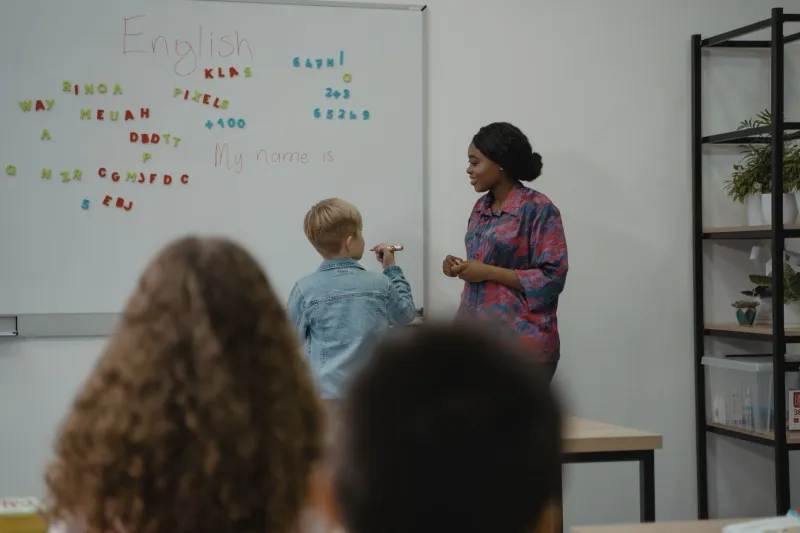
Every Saturday morning for the past eleven years, Cô Mai Lê has unlocked the side door of a Vietnamese Catholic church in suburban Houston and set up sixteen tiny chairs in a circle. By 9 a.m., children between the ages of five and twelve file in, backpacks bouncing, and for two hours they do something that feels increasingly countercultural in 2024: they learn to speak, read, and write Vietnamese.
"Some of the parents speak Vietnamese at home. Some don't anymore," says Cô Mai, 58, who retired from a career as a dental hygienist to run the school full-time. "But they all bring their kids here because they feel something is being lost. They can't always name it. But they feel it."
What they're feeling has a name in sociolinguistics: heritage language attrition. And for Vietnamese-Americans, it's happening fast.
The Numbers Tell a Complicated Story
The Vietnamese-American community is one of the largest Asian-American groups in the United States, with roughly 2.2 million people according to recent Census data. Vietnamese is also one of the most widely spoken non-English languages in states like California, Texas, and Virginia. On the surface, the language seems robust.
But dig a little deeper and a pattern familiar to immigrant communities emerges. Research on heritage language retention consistently shows that by the third generation, fluency drops dramatically — often to near zero. First-generation immigrants speak their native language at home. Their American-born children become bilingual but often English-dominant. Their children, in turn, may understand a few phrases, recognize the sounds, but struggle to hold a real conversation.
For a language as tonally complex as Vietnamese — with six distinct tones that change a word's meaning entirely — the drop-off can be especially steep. It's not a language you can pick up casually. It requires sustained, intentional effort.
That's where women like Cô Mai come in.
The Informal Teachers Nobody Talks About
Ask around in any Vietnamese-American community and you'll find them: the women running weekend language schools out of church halls and community centers, the mothers who insist on Vietnamese-only dinner conversations even when their kids roll their eyes, the grandmothers whose entire relationship with their grandchildren depends on a linguistic bridge that's threatening to wash out.
Chị Hương Võ, 41, grew up in New Orleans and is raising three kids in the Atlanta suburbs with her husband, who is second-generation Vietnamese-American. "My kids go to school all week in English, they watch TV in English, their friends speak English," she says. "Vietnamese has to be something we protect intentionally. It doesn't just happen."
Her strategy is layered. She speaks to her children exclusively in Vietnamese at home — a rule she enforces even when it's easier not to. She subscribes to Vietnamese-language YouTube channels designed for kids. She FaceTimes her mother in Saigon twice a week and hands the phone to her kids. "My mom is the best Vietnamese teacher they have," Hương laughs. "She doesn't speak any English, so they have to try."
Community Schools: More Than Just Grammar
Vietnamese-language schools — often called trường Việt ngữ — have existed in the US since the first wave of refugees arrived after 1975. Many are affiliated with churches or Buddhist temples. Some are run by community organizations. Most operate on shoestring budgets, staffed almost entirely by volunteers.
And the majority of those volunteers are women.
Cô Ngọc Trần has been teaching at a Vietnamese school in San Jose for eight years. She holds a master's degree in education and could be doing something far more lucrative on weekends. She doesn't. "This is my contribution," she says simply. "My parents sacrificed everything to bring me here. The least I can do is make sure their grandchildren know where they came from."
What happens in these classrooms goes well beyond vocabulary drills. Kids learn to write thư gửi bà — letters to their grandmothers. They memorize folk songs. They perform skits about Vietnamese holidays. They learn that being Vietnamese-American isn't a contradiction — it's a whole, complete identity.
"When a child can finally call their grandparent on the phone and have a real conversation, not just say 'hi' and hand the phone back to mom — that's the moment," Cô Ngọc says. "You can see it change something in them."
The Digital Shift
The pandemic, for all its devastation, pushed Vietnamese-language education in some unexpectedly positive directions. Schools that had never considered online instruction were suddenly on Zoom, and that opened doors for kids in areas without large Vietnamese communities to access classes they never could before.
Several Vietnamese-American women have built significant online followings teaching the language through social media. Channels on YouTube and TikTok offer everything from beginner pronunciation guides to advanced grammar — all free, all accessible, all created by community members who simply decided to share what they knew.
Chị Phương Nguyễn, a mom of two in Virginia, started a private Facebook group for Vietnamese-American parents navigating heritage language education. It now has over 12,000 members. "Parents share resources, ask questions, vent about the hard days," she says. "It's a support group as much as anything else."
Resources for Families Who Want to Start
If you're a Vietnamese-American family wanting to strengthen your connection to the language, here are some places to begin:
- Find a local trường Việt ngữ: Many Vietnamese-American community centers, Buddhist temples, and Catholic parishes run weekend schools. Search your city's Vietnamese community Facebook groups or contact local Vietnamese associations.
- Vietnamese Language and Culture (VLC) programs: Some public school districts in California, Texas, and Virginia offer Vietnamese as a world language elective — worth asking your school district about.
- Online resources: YouTube channels like "Tiếng Việt Ơi" and apps like Pimsleur offer structured learning for all ages.
- Connect with grandparents: Structured, regular video calls with Vietnamese-speaking relatives remain one of the most effective (and meaningful) tools available.
What's Really at Stake
Language is never just language. It's the vehicle for stories, for humor, for the specific way a grandmother says con when she's proud of you. It's the difference between a relationship with your heritage and a postcard version of it.
Cô Mai wraps up her Saturday class with a song — the same one she learned as a child in Việt Nam. The kids sing along, some more confidently than others. A few parents linger by the door, watching.
"I don't know if we'll win," she admits quietly afterward. "The pull of English is very strong. But I know that every child who leaves here today knowing a little more Vietnamese than when they came in — that matters. That's one more thread still connected."
And thread by thread, these women are holding the fabric together.