Midnight at the Banquet Hall: The Wedding That Doubles as a Family Reunion
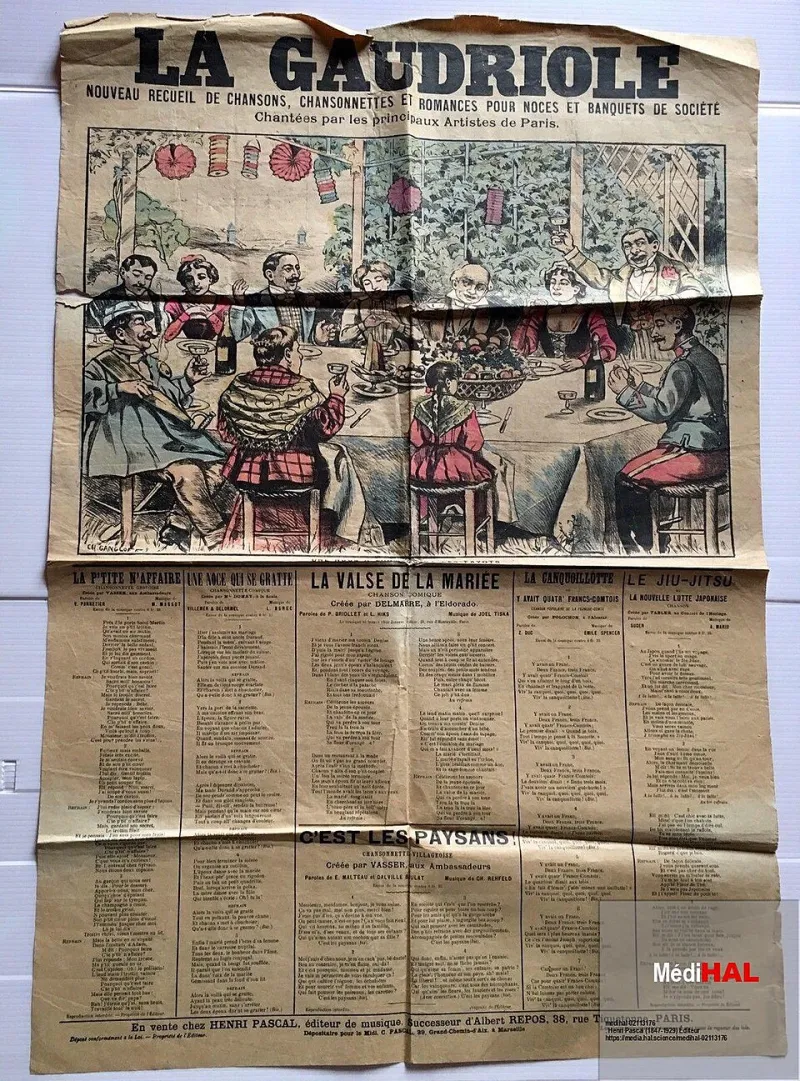
Photo: Éliane Daphy / Institut Interdisciplinaire d'Anthropologie du Contemporain / National Center for Scientific Research, Public domain, via Wikimedia Commons
The Mic Is Never Really Off
Ask anyone who's been to a Vietnamese-American wedding and they'll tell you the same thing: the schedule is a suggestion. The ceremony starts at six, the entrance procession takes forty minutes, and by the time the ten-course banquet is rolling, someone's grandmother has already critiqued the bride's dress, three cousins have compared baby photos, and a man in his fifties — no one is entirely sure whose uncle he is — has claimed the karaoke machine for the rest of the night.
And that's exactly the point.
A Lễ Ăn Hỏi, Then a Show
The day usually opens with the lễ ăn hỏi, the engagement ceremony where the groom's family arrives bearing gifts: betel leaves, areca nuts, roasted pigs, mâm quả trays wrapped in red cellophane. The mothers negotiate. The tea is poured. The ancestors are told.
Then everyone drives to a banquet hall in San Jose, Garden Grove, Houston, or Falls Church — cities where Vietnamese-American weddings fill ballrooms nearly every weekend of the year.
"We're not just hosting a couple," says Linda Tran, who has planned weddings in Orange County for over fifteen years. "We're hosting four hundred people who haven't seen each other since the last wedding. Sometimes the couple knows maybe half the guest list. That's normal. The wedding belongs to the community as much as to them."
The Reunion Nobody Calls a Reunion
There's no formal Vietnamese word for "family reunion" that gets used the way Americans use it. Instead, the community has weddings. Diaspora families scattered across Texas, Louisiana, California, and Virginia will fly in for a single evening — and the banquet hall becomes the place where babies are passed around, old village connections are reconfirmed, and aunts size up single cousins with unmistakable intent.
Which brings us to the matchmaking. Every Vietnamese-American adult has a story about being seated, strategically, next to someone "you two should talk." Planners admit it happens on purpose. Parents coordinate. Seating charts are battlefield maps.
The Second Generation's Negotiation
Younger couples aren't rejecting the format — they're editing it. Many now do a first look photo session before the ceremony, trim the guest list, add a DJ who plays something other than Trịnh Công Sơn. But almost everyone keeps the áo dài, the tea ceremony, and yes, the karaoke.
"I wanted a small wedding," says Minh, 29, who married in Sacramento last year. "We ended up with 350 guests. My mom invited her entire church. But when my bà ngoại stood up during the entrance and cried — that's when I got it. This was for her too."
The Uncle at Midnight
And so, somewhere around the eleventh hour, when the cake has been cut and the younger cousins have fled to the lobby, the karaoke machine hums to life. The uncle sings. Badly, probably. The room claps anyway.
It looks chaotic from the outside. It's actually the whole architecture of a diaspora: a community that crossed an ocean, rebuilding its village one banquet hall at a time — one off-key ballad at a time.