The Casserole and the Incense: How Vietnamese-American Families Rebuild the Village After a Death
Photo: Unknown authorUnknown author or not provided, Public domain, via Wikimedia Commons
On a Thursday afternoon in suburban Dallas, the parking lot of a funeral home fills with people carrying foil trays. Inside, a rented chapel has been arranged with a simple altar: a framed photograph, white chrysanthemums, fruit, a small bowl of incense. The family has been at the funeral home since morning, signing paperwork, choosing a casket, translating documents for a relative who flew in from California.
By evening, the room smells like bún and coffee. A cousin is plugging in a rice cooker. Someone's neighbor has brought a sheet cake with Grandma written in blue icing. A Buddhist monk is expected at seven. The funeral director, who has done this before, has learned to leave the side door unlocked.
This is what mourning looks like for many Vietnamese-American families: a private grief that is also a public logistics operation. The village is not automatic here. It has to be reassembled.
The room is American. The rhythm is often not.
Most Vietnamese-American families in the U.S. do not have a village elders' council or a neighborhood that handles the funeral automatically. They have a funeral home with a laminated price list, a temple or church with a busy calendar, relatives scattered across time zones, and a workplace that asks how many days you need.
The rituals still carry weight. A wake may be held at a funeral home over two evenings. A Buddhist family may schedule ceremonies every seven days, with the 49-day mark as a significant gathering. A Catholic family may hold a Vietnamese-language Mass and a reception in the parish hall. Some families do both. Some choose cremation; others arrange burial; some investigate repatriation, which is expensive and logistically complicated.
The American part is not the enemy of the Vietnamese part. It is the frame. The question is what fits inside it.
The potluck is infrastructure
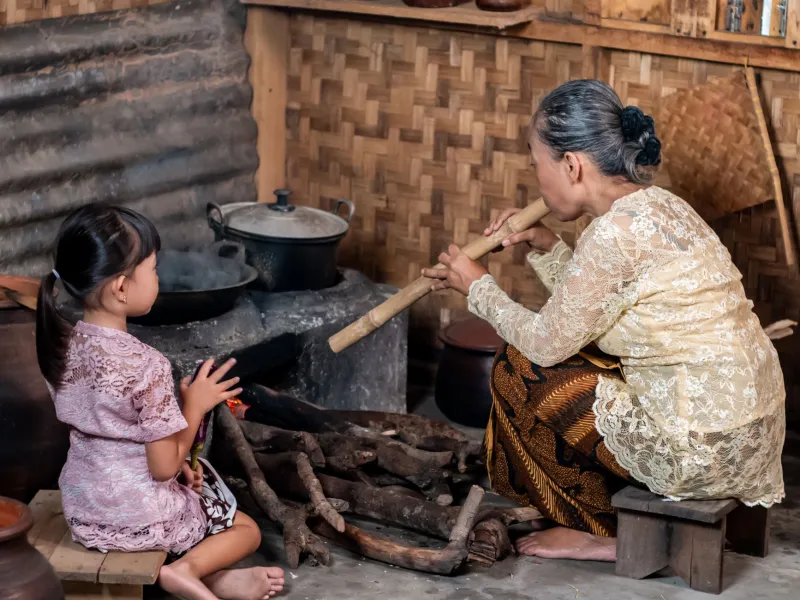
When people say funeral potluck, they can make it sound casual. It is not. Food is the labor that lets a grieving family stop making decisions. In Vietnam, neighbors and relatives often take over the kitchen and the arrangements. In the U.S., that village has to be recreated through sign-up sheets, group texts, and the unglamorous coordination of who can pick up Auntie from the airport.
The menu is usually practical: xôi, bánh mì, phở, fruit trays, rice, braised pork, vegetarian dishes for the temple crowd, coffee. At a Catholic reception, there may be gumbo next to chả giò, depending on the region. At a temple, the kitchen may be run by volunteers who have done it for years. At a backyard memorial, someone's non-Vietnamese coworker may bring a casserole and a bag of ice, unsure what else to do.
That casserole is not a failure of tradition. It is the same impulse: feed the people who came.
Who carries the village
The work is often invisible until it is not done. Someone coordinates the food. Someone books the room. Someone handles the money. Someone translates for the funeral director. Someone makes sure the monk has a ride. Someone babysits the kids in the hallway. Someone sets up a livestream for relatives who cannot travel.
In many families, women carry a disproportionate share of this labor, especially the cooking and hosting. Younger relatives are increasingly using spreadsheets, online sign-ups, and payment apps to share the load. That shift is not just convenience. It changes who gets to participate. A cousin who lives across the country can send money or order food. A coworker who does not know the prayers can still take a shift at the reception.
The cost side is real. A traditional funeral with viewing, service, and burial can run well into five figures in many U.S. cities. Cremation is often less expensive but still not cheap. Temple donations, transportation, and food add up. Families sometimes fundraise through community networks, and the generosity can be overwhelming. It can also be uneven. Not every family has a village with money and time.
Two calendars, one grieving family
Vietnamese-American families often describe the funeral as a series of deadlines: the viewing, the service, the cremation or burial, the seven-day ceremony, the 49-day ceremony, the first anniversary. American logistics do not always line up. People work. People live far away. A 49-day ceremony may be held on a Sunday because that is when the temple hall is free and relatives can drive in.
Some families split the rituals. A viewing at a funeral home on Friday. A memorial at the temple on Saturday. A reception at a relative's house on Sunday. A livestream for the cousin in Germany. A group chat for the people who cannot be in the room. It can look messy from the outside. From the inside, it is a calendar built around who can show up.
The tension is not usually between being Vietnamese and being American. It is between being present and being practical. The rituals help. The food helps. The people who show up with a tray and no agenda help most.
The village is rebuilt one task at a time
At the Dallas funeral home, the monk arrives late because of traffic. The family laughs a little, the way tired people laugh. A niece passes out plates. A neighbor refills coffee. The funeral director stands by the door with a water bottle, watching the room fill.
No one calls it a potluck. It is just what the family does. But that is what the village looks like now: not a place you are born into, but a set of people who agree to carry food, chairs, and each other for a few days. The grief stays private. The mourning becomes shared. That is the whole point.