From Saigon Sidewalks to Whole Foods Shelves: The Vietnamese Iced Coffee Land Grab
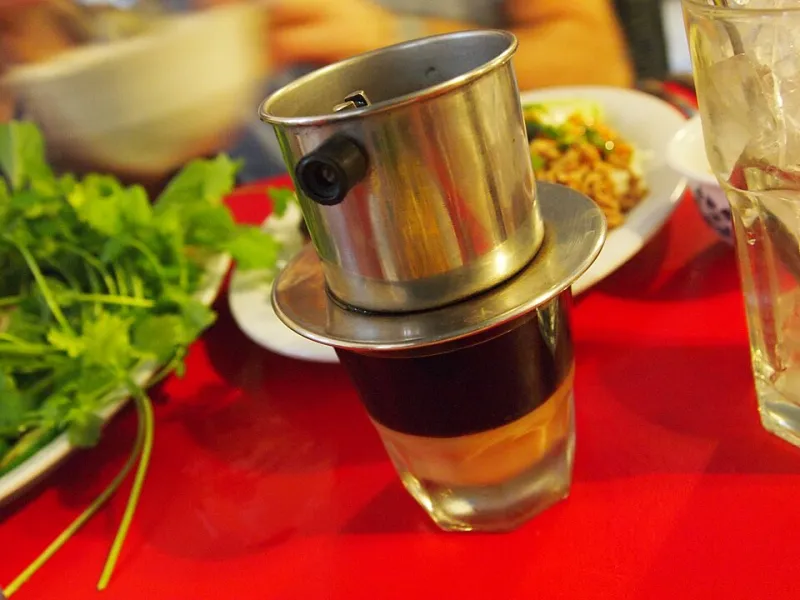
Photo: Shreveport-Bossier Convention and Tourist Bureau, CC BY 2.0, via Wikimedia Commons
The Drink That Went Everywhere
Ten years ago, ordering Vietnamese iced coffee meant finding the one phở restaurant in town that also ran a coffee menu. Today, you can grab a canned version at Whole Foods, hit a drive-thru in Dallas, or choose between three competing chains in a single Houston shopping center. Cà phê sữa đá — strong robusta, condensed milk, ice — has officially crossed over.
The numbers back the vibe. Vietnamese coffee is one of the fastest-growing beverage categories in the U.S. specialty market, and franchise concepts are expanding at a pace that would've seemed absurd when the drink was still a rumor outside Orange County.
A Colonial History in a Glass
The drink's origin story is complicated, and the new chains rarely mention it. Coffee arrived in Việt Nam with French Catholic missionaries in the 1800s. Condensed milk came from the same colonial supply chain — fresh dairy was scarce, and shelf-stable milk was the workaround. Vietnamese drinkers didn't adopt the French café; they transformed it, swapping in robusta beans grown on Vietnamese soil, brewing them in a phin filter, and sweetening the result into something entirely its own.
That's the pattern, isn't it? Take what an empire hands you and make it unmistakably yours. It's why the drink resonates so deeply with Vietnamese-American entrepreneurs — many of whom understand reinvention on a personal level.
The Family Shops Got Here First
Before the franchises, there were the pioneers: refugees and their kids opening coffee shops in strip malls in San Jose, Garden Grove, Atlanta. They roasted their own beans, trained staff on the phin, and built loyal followings one condensed-milk drizzle at a time.
"We spent fifteen years teaching customers what cà phê sữa đá even was," says one second-generation owner in Virginia, who asked not to be named. "Now a chain opens with venture capital, and suddenly it's a 'trend.' We were never a trend. We were a livelihood."
The Honest Question
So when the drink goes mainstream, who profits — and who gets written out? Some family shops are adapting, adding boba menus and sleek branding. Others are doubling down on authenticity: the metal phin, the slow drip, the plastic stool energy of a Saigon sidewalk.
Your Field Guide
Want to taste the difference for yourself? Start here:
- The national chains — consistent, fast, Instagram-ready. Fine entry points.
- The regional franchises — often founded by Vietnamese-American families, one step closer to the source.
- The independent shop in the strip mall — the real deal. Ask what beans they use. If they say robusta, stay.
- The phở restaurant that also serves coffee — the original gateway. Respect it.
- Your friend's mom's kitchen — unbeatable. Bring condensed milk. Leave with a story.
The drink survived colonization, war, and displacement. It'll survive its fifteen minutes of trendiness too. The question is whether the story travels with it — or gets left behind on a strip mall counter where it started.