No Such Thing as a Recipe: How Vietnamese-American Food Makers Are Cooking on Their Own Terms
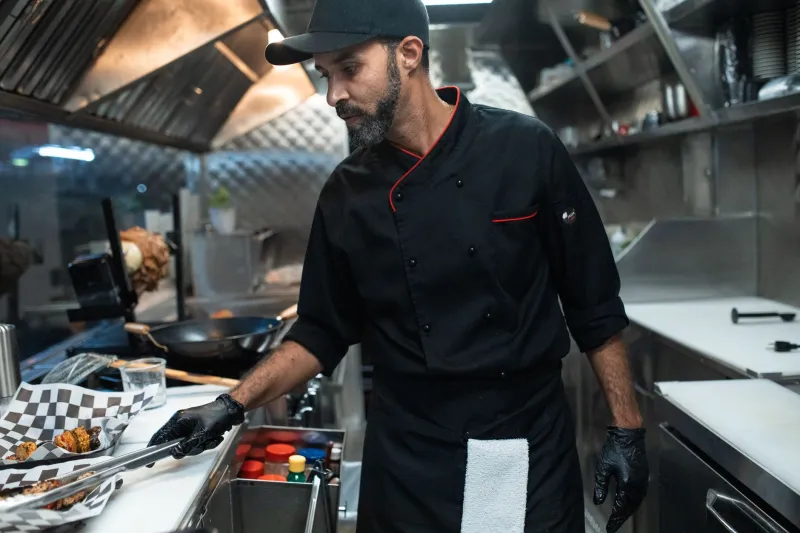
Somewhere in Portland, Oregon, there's a bánh mì stuffed with smoked brisket, pickled jalapeños, and a chipotle-lime aioli that would make a Saigon street vendor do a double take. The person who invented it, Kevin Đỗ, grew up in Texas. He learned to smoke brisket before he learned to make nước chấm. He is, by any reasonable definition, Vietnamese. He is also, unmistakably, Texan. His food is both of those things simultaneously, and he has stopped apologizing for it.
"People used to come to my truck and ask if my bánh mì was authentic," Kevin says. "Now I ask them: authentic to what? To my grandmother's kitchen? To the version she made in Houston after she'd been here twenty years? To the one her mother made in Huế? There's no single answer. There never was."
This is the conversation happening in Vietnamese-American kitchens, food trucks, and restaurant dining rooms across the country right now. And it's one of the most interesting food conversations in America.
The Authenticity Trap
For a long time, Vietnamese food in America existed in a particular kind of pressure. Restaurants were expected to be recognizable, to serve as a bridge for non-Vietnamese customers who wanted something real — a word that almost always meant familiar to someone else's idea of what Vietnamese food should be. Pho had to look a certain way. Spring rolls had to taste a certain way. Deviation was risky.
That pressure came from multiple directions simultaneously: from non-Vietnamese customers who wanted the experience of eating something foreign but not too foreign, and from within Vietnamese communities where food functions as cultural memory and changing it can feel like erasing something sacred.
Food historian and writer Thảo Nguyễn, based in Los Angeles, puts it plainly. "Vietnamese food in America has been caught between two audiences who both think they own it," she says. "Neither of them is the chef."
What Happens When the Chef Owns It
When Vietnamese-American food makers stop asking for permission, something interesting happens. The food gets more Vietnamese, not less.
That sounds counterintuitive until you understand what it actually means. Chị Mai Linh runs a pop-up dinner series in the DC area called Bàn Ăn — the dinner table — where she serves eight-course Vietnamese-American meals that move through her family's migration story course by course. The first dish is her grandmother's gỏi cuốn, made exactly as it was made in Đà Nẵng. The last dish is a Vietnamese-spiced sweet potato pie that she developed after her first Thanksgiving in Virginia, when she was twelve and desperately wanted both things at once.
"People cry at that last dish," she says. "Not because it tastes like Vietnam. Because it tastes like being Vietnamese in America. Those are different things, and both of them are real."
In Houston — home to one of the largest Vietnamese-American communities in the country — chef Tommy Bùi has built a following for his restaurant Phố Tây (Western Street) by doing something that initially scandalized some of his neighbors: putting Cajun spices in his bún bò Huế. "Houston is a Cajun city and a Vietnamese city," he says. "I grew up eating both. My food is what happens when those two things love each other."
The restaurant has a six-week waitlist. His neighbors have stopped being scandalized.
The Ingredient Question
Part of what's driving this movement is practical. Vietnamese-American chefs cooking in America are working with American ingredients — and American ingredients have changed dramatically in the last two decades. Farmers markets in cities like Minneapolis, Atlanta, and Seattle now carry lemongrass, Thai basil, fresh turmeric, and bitter melon. At the same time, American culinary culture has become genuinely more curious, more willing to follow a flavor wherever it leads.
For a chef like Kevin Đỗ in Portland, that means access to exceptional local produce and a customer base that will try anything once. "I can get ramps in spring and I can get rau muống [water spinach] from a Vietnamese farm twenty miles away," he says. "Why would I pretend those two things exist in separate worlds?"
His current menu includes a summer roll filled with roasted beets, goat cheese, and Vietnamese herbs — a dish that has no precedent anywhere in Vietnam and is also, somehow, deeply Vietnamese in its logic. The wrapper is still rice paper. The herbs are still the soul of the thing. The structure — the roll, the dip, the fresh crunch — is unmistakably gỏi cuốn. It's just become something else too.
The Community Conversation
Not everyone is enthusiastic. In Vietnamese-American communities across the country, the fusion debate is real and sometimes heated. For older generations who used food as one of the last reliable anchors to a life they left behind, watching that food transformed can feel like loss.
"My mother cried the first time she saw a pho burrito," says Thảo Nguyễn. "Not because it tasted bad. Because she felt like something had been taken from her. That's a legitimate feeling and we shouldn't dismiss it."
But many of the chefs driving this movement are deeply aware of that weight. Chị Mai Linh's Bàn Ăn dinner series always begins with traditional dishes, served exactly as they've always been served, before moving into territory that's more her own. "I'm not replacing anything," she says. "I'm adding a room to the house. The original rooms are still there."
That framing — addition rather than replacement — seems to be where the most interesting conversations are landing. Vietnamese food in America isn't being overwritten. It's being layered.
What 'Authentic' Actually Means
Here's what the food history actually shows: Vietnamese cuisine has always been a cuisine of absorption. Chinese influences, French colonial influences, regional variations so dramatic that a dish from Huế and a dish from Saigon can be almost unrecognizable as relatives — Vietnamese food has never been a single fixed thing. It's always been what it needed to be, where it was, with what was available.
"The most authentic thing about Vietnamese food is that it adapts," says Tommy Bùi. "That's not a modern invention. That's the whole history of it."
Seen through that lens, the smoked brisket bánh mì in Portland isn't a departure from tradition. It's tradition continuing to do exactly what it's always done — arriving somewhere new, looking around, and figuring out how to belong.
Kevin Đỗ closes his food truck at 3 p.m. most days, whenever he sells out. He's working on a cookbook. He's thinking about a brick-and-mortar space. He still makes his grandmother's nước chấm exactly the way she taught him — fish sauce, lime, sugar, garlic, chilies, measured by instinct and taste.
Some things, he says, you don't mess with. Everything else is fair game.