When the Pot Knows Best: How Vietnamese-American Women Are Using Ancient Kitchen Wisdom to Heal Modern Wounds
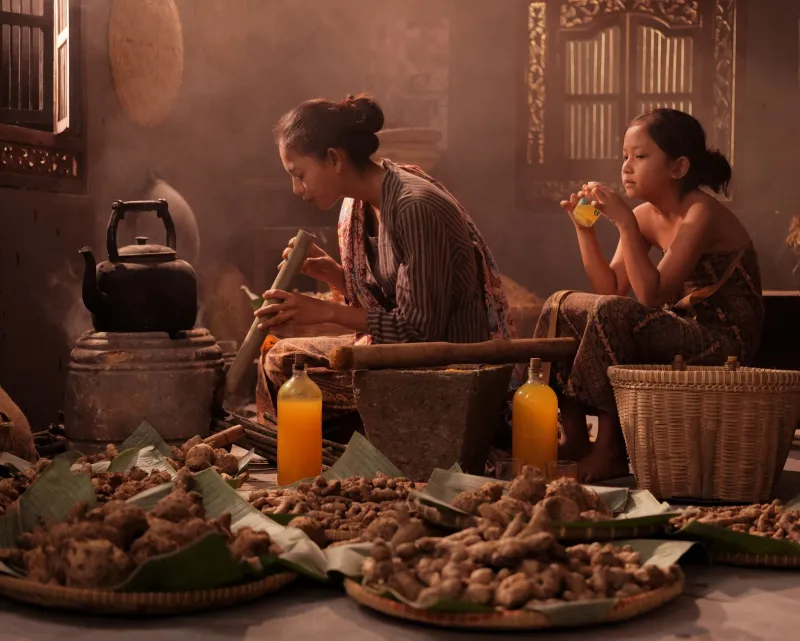
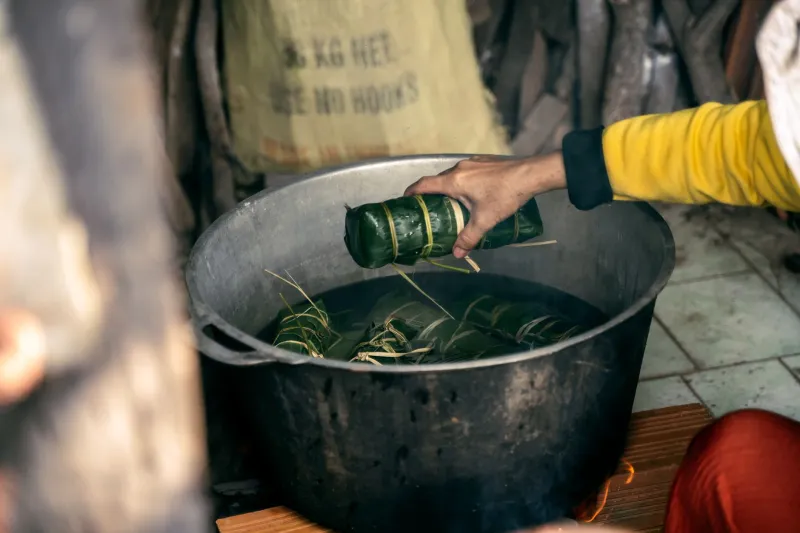
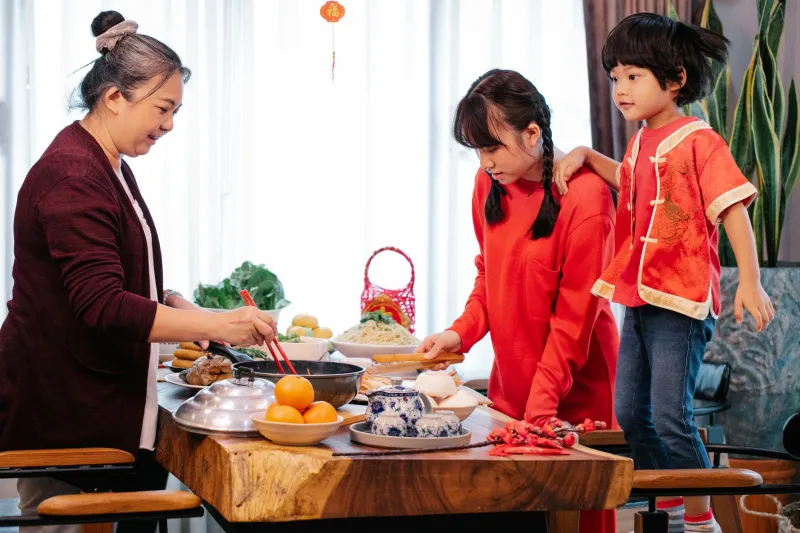
There's a pot on the stove at Linh Nguyễn's house in San Jose that's been simmering since six in the morning. It's not soup exactly — or at least, not the kind you'd find on a restaurant menu. It's a slow-cooked blend of ginger, goji berries, dried longan, and a few roots her mother shipped from a Vietnamese grocery in Houston. Her teenage daughter has a cold. Her mother-in-law is visiting from Garden Grove. And Linh, a 38-year-old nurse, is doing what the women in her family have done for as long as anyone can remember: she's cooking her way toward healing.
"In nursing school, I learned about evidence-based medicine," she says, lifting the lid and breathing in the steam. "But honestly? A lot of what my mom taught me in the kitchen holds up just fine."
For Vietnamese-American women across the country, the kitchen has never been just about feeding people. It has always been a site of care — medical, emotional, and spiritual all at once. And in communities spread from Little Saigon in Orange County to the Vietnamese enclaves of New Orleans and Northern Virginia, that tradition is finding new life.
More Than a Meal: The Logic Behind the Broth
Traditional Vietnamese food culture draws heavily from principles rooted in Chinese medicine and indigenous Vietnamese practice — a framework that classifies foods as "nóng" (hot) or "lạnh" (cold) based not on temperature but on their energetic effect on the body. Ginger warms. Bitter melon cools. Certain soups are for postpartum recovery. Others are for grief. There's a dish for every kind of hurt, and Vietnamese mothers have been the keepers of that knowledge for centuries.
Bà Hương Trần, 71, immigrated to the U.S. from Đà Nẵng in 1992 and now lives with her daughter's family in Garland, Texas. She doesn't call herself a healer. But her family would.
"When my grandchildren are sick, they come to me," she says through her daughter, who translates. "I make cháo — rice porridge — with pork bone, ginger, and a little fish sauce. Nothing fancy. But they sleep better after. They feel better. That's not magic. That's just knowing what the body needs."
Cháo, the Vietnamese rice porridge, is perhaps the most elemental of these healing dishes. Light enough for a sick stomach, warming enough for a cold night, it's the food Vietnamese families reach for when someone is fragile. Variations exist for nearly every condition: cháo gà for fever, cháo tim gan for children who need iron, cháo đậu xanh — mung bean porridge — for detoxing excess heat from the body during summer.
Adapting Old Recipes to New Realities
Not everything translates perfectly. Some ingredients are hard to find outside of specialty Asian grocery stores. Others require time that working mothers in America simply don't have. And younger Vietnamese-Americans — raised on school cafeteria lunches and DoorDash — don't always know the recipes, let alone the reasoning behind them.
That's where women like Mỹ Lê come in. A 34-year-old food blogger and second-generation Vietnamese-American based in Atlanta, Mỹ started documenting her grandmother's recipes three years ago after her grandmother was diagnosed with early-stage dementia.
"I realized I had maybe a small window of time to actually learn this stuff," she says. "Not just write down ingredients, but understand why. Why we add certain things. Why we cook at certain times of year. Why some foods are for sadness and others are for celebration."
Her blog, which she runs alongside a full-time marketing job, has become an unexpected community hub. She posts simplified versions of traditional dishes — adaptations that use ingredients available at Whole Foods or H Mart — alongside the cultural context her grandmother provides.
"People message me constantly," she says. "Vietnamese-Americans who are disconnected from their families. People who are grieving. People who just want to feel less alone. And I think food is doing that work. The recipes are almost secondary."
The Emotional Architecture of Cooking
There's something that Vietnamese-American women talk about with striking consistency when asked about food and healing: the act of cooking itself — not just the eating — is part of the medicine.
"My mom never sat me down and said, 'let's talk about your feelings,'" says Jade Phạm, 29, a social worker in Philadelphia. "But she would make canh chua when I was going through something hard. Sour soup. And she'd stand there and cook it and we'd just talk while she was cooking. That was her therapy. That was mine."
Calnh chua — a tangy tamarind-based broth loaded with tomatoes, pineapple, and fish — is another one of those dishes that carries emotional weight beyond its ingredients. Bright and assertive in flavor, it has a way of cutting through numbness. It's the kind of food that makes you feel present.
For many Vietnamese-American families, the kitchen is where the hardest conversations happen not because anyone planned it that way, but because the act of cooking together creates a kind of safety. Hands are busy. Eyes don't have to meet. And something is always becoming — transforming from raw ingredients into something nourishing.
Passing It Forward Without Losing the Thread
The challenge, as Mỹ and others acknowledge, is that this knowledge has always been passed down informally — through watching, through proximity, through living in the same household across generations. And in America, that proximity is often lost.
Families are spread across states. Grandmothers live alone or in assisted living facilities where no one speaks Vietnamese. Kids grow up eating cereal and sandwiches and reach adulthood not knowing what cháo is, let alone how to make it.
"I think a lot of us feel that loss without being able to name it," says Jade. "Like something is missing from how we take care of ourselves and each other. And then you taste your grandmother's soup and you realize — oh. That's what I've been missing."
The women doing this work — teaching, documenting, adapting, passing on — are not trying to recreate Vietnam in American kitchens. They're doing something more complicated and more honest than that. They're finding out what survives the crossing. What still works. What still heals.
Bà Hương, back in Garland, puts it simply. "Food is how we say I love you when we don't have the words," she says. "It doesn't matter where you live. That part doesn't change."
The pot on Linh's stove in San Jose has been simmering for three hours now. Her daughter is asleep on the couch. Her mother-in-law is watching Vietnamese television in the next room. And the whole house smells like something ancient and entirely American at the same time — like ginger and longan and the particular warmth of a kitchen that knows what it's doing.
Some things, it turns out, don't need translating. They just need someone willing to keep the flame on.