The Ticket You Can't Always Buy: Vietnamese-Americans and the Weight of Staying Behind

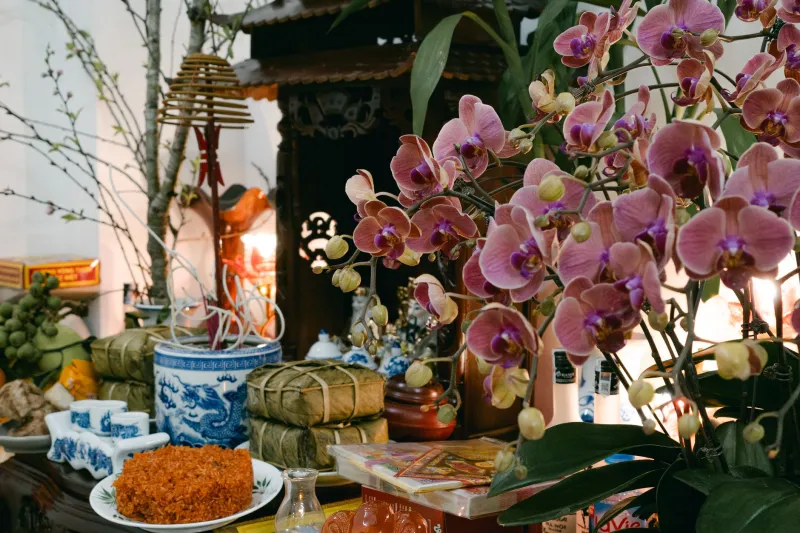
Somewhere in a suburb outside Houston, a woman named Linh opens her phone at 6 a.m. and sees a photo her mom sent from Saigon. Her grandmother is sitting in the same plastic chair she always sits in, the same wooden altar visible in the background, the same afternoon light coming through the shutters. Everything looks exactly the same as when Linh left seven years ago. And somehow, that's the part that hurts the most.
She hasn't been back since her wedding. There's always a reason. The cost. The kids' school schedules. The job that doesn't offer enough PTO for a trip that actually means something. She tells herself next year. She's been telling herself that for a while now.
This is a story a lot of Vietnamese-Americans know by heart — even if they've never said it out loud.
The Price Tag Nobody Talks About
A round-trip flight from most major U.S. cities to Vietnam runs anywhere from $900 to $1,800, sometimes more depending on timing and layovers. Multiply that by a family of four, add hotels or the logistical shuffle of staying with relatives, factor in gifts — because you always bring gifts — and a trip home can easily cost $5,000 to $8,000 or more. For families already stretched thin between rent, childcare, and sending monthly remittances back, that math just doesn't work.
And yet, the expectation — spoken or not — is that you go. That you show up. That you don't let too much time pass.
"There's this unspoken rule," says Minh, a 34-year-old IT professional in the Bay Area whose parents emigrated in the early '90s. "If you're doing okay in America, you go back. If you don't go back, people wonder why. And you start wondering too."
The guilt isn't just about the trip itself. It's about what the trip represents: presence, loyalty, proof that you haven't forgotten where you came from.
When Duty and Distance Collide
Vietnamese culture places enormous weight on filial piety — the responsibility children carry toward their parents and extended family. It's not just a value; it's closer to a moral framework. And for Vietnamese-Americans navigating that framework from 8,000 miles away, the tension can be quietly suffocating.
You can send money. You can call on weekends. You can make sure your kids know their grandparents' faces on FaceTime. But none of it fully replaces being in the room. Holding someone's hand. Sitting across the table from your bà nội and eating phở the way she makes it, which is the only way it ever really tastes right.
Thu, a 41-year-old nurse in Northern Virginia, describes the grief of missing her father's final months due to visa complications and a hospital schedule that couldn't bend. "I was on the phone with him almost every day," she says. "But I wasn't there. And I will carry that for the rest of my life."
Her story isn't uncommon. For many Vietnamese-Americans, the most acute version of this guilt arrives not around holidays but around illness and death — the moments when distance becomes irreversible.
Redefining What 'Home' Looks Like From Here
But here's the thing about guilt: it doesn't have to be the last word.
A growing number of Vietnamese-Americans are quietly, intentionally rewriting what staying connected looks like — not as a replacement for going back, but as something real and sustaining in its own right.
Some families have started doing what one woman in San Jose calls "parallel living" — syncing up daily routines with relatives in Vietnam through voice messages, shared photo albums, and yes, a lot of TikTok. Her mom in Đà Nẵng follows her kids' school events through Instagram stories. Her daughter knows her grandmother's laugh before she's ever heard it in person.
Others are investing in longer, less frequent trips rather than quick annual visits — saving for two or three years to spend a full month back home rather than a rushed week. It costs more upfront, but the quality of connection is different. You're not just passing through. You're actually there.
Community organizations across the U.S. are also starting to acknowledge this tension more openly. Cultural centers, Vietnamese student associations, and diaspora groups in cities like Little Saigon in Westminster, California, or the Eden Center in Falls Church, Virginia, are creating programming that helps people process the emotional weight of distance — not just celebrate heritage on holidays.
The Guilt That Doesn't Go Away (And Maybe Shouldn't)
Some people will tell you the guilt fades. Others say it just changes shape.
What seems truer, for a lot of Vietnamese-Americans, is that the guilt is actually a form of love — love that hasn't found its right container yet. It's what happens when your values and your circumstances don't line up, and you're trying to honor both.
Linh, back in Houston, eventually booked a ticket. Not next year — this year. She cashed in some savings, asked her mother-in-law to watch the kids for two weeks, and went. Just her. No big family trip, no perfect timing. Just a woman who needed to sit in that plastic chair next to her grandmother before the opportunity disappeared.
"I cried the whole first day," she says. "Not because anything was wrong. Just because I was finally there."
She's already thinking about how to go back again sooner. She doesn't have a plan yet. But she's stopped waiting for the perfect moment.
Finding Your Own Way Back
If you're living with this particular kind of quiet ache, you're not alone — and you're not a bad son or daughter or grandchild for building a life here. The Vietnamese-American experience has always been about holding two things at once: the place you left and the place you're building. Neither one cancels the other out.
The return flight matters. But so does the life you're living while you're waiting to take it.
And sometimes, staying connected means starting with the next phone call — not the next plane ticket.