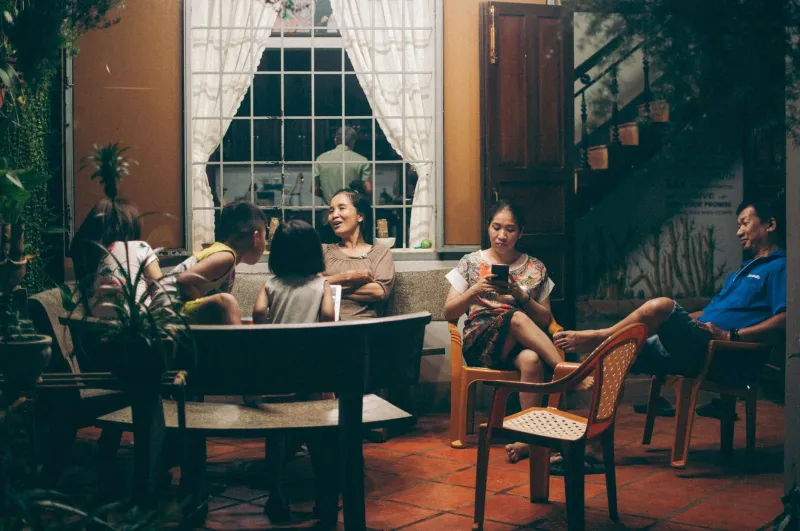
When Being Asian Is Normal: Vietnamese-American Parents in Majority-Asian Cities and the New Puzzle of Cultural Identity
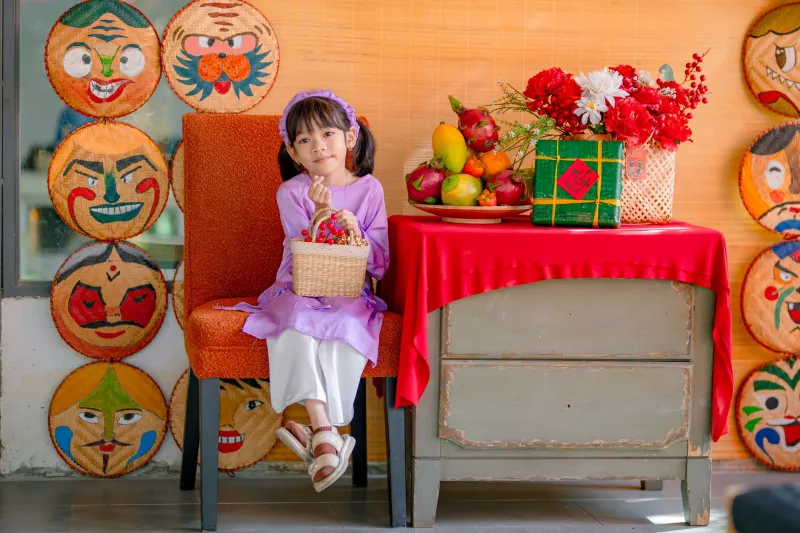
Drive down Bolsa Avenue in Westminster on a Saturday morning and the air smells like phở and bánh mì and something frying in a wok somewhere you can't quite locate. The signage is bilingual. The radio in the nail salon is playing Vpop. The woman at the bánh cuốn counter knows your order before you finish saying it.
For Bích Trần, raising two kids in this corner of Orange County, it is everything her parents dreamed of when they came to California in 1981. And it is also, unexpectedly, the source of her biggest parenting headache.
"My daughter doesn't think of herself as Vietnamese," Bích says, not with anger but with a kind of baffled wonder. "She thinks of herself as American. And I don't know how that happened when we literally live inside the Vietnamese community."
It's a puzzle that's quietly surfacing in Vietnamese-American households across the country's majority-Asian enclaves — Orange County, San Jose's Eastside, Houston's Midtown, the Richmond and Sunset districts of San Francisco. These are places where Asian faces are the norm, Vietnamese businesses anchor the local economy, and Tết celebrations draw thousands. And yet, for a growing number of second and third-generation kids raised here, cultural identity is no less complicated than it is for peers in predominantly white suburbs. Just differently complicated.
The Paradox of Proximity
The conventional narrative around Vietnamese cultural preservation assumes a certain kind of pressure: the pressure of being a minority, of having your identity questioned or erased, of fighting for visibility in spaces that weren't built with you in mind. That pressure, uncomfortable as it is, has historically served as a kind of cultural glue. When you are the only Vietnamese kid in your school, you know exactly what you are.
But in communities where Asian-Americans make up 40, 50, sometimes 60 percent of the local population, that particular pressure evaporates. And with it, sometimes, goes the urgency.
"My son went to a high school that was probably 65 percent Asian," says Đức Phạm, 47, a contractor in San Jose. "He had Chinese friends, Korean friends, Filipino friends, Vietnamese friends. He felt totally comfortable. But when I asked him what made him Vietnamese specifically, he kind of shrugged. 'I don't know, Dad. We eat Vietnamese food?'"
Dức laughs, but it's a complicated laugh. He grew up in a small town in Texas where he was one of maybe five Asian kids in the whole school. He never had to think about what made him Vietnamese because the world reminded him constantly. His son has never had that experience — and Đức isn't sure whether to feel relieved or worried.
When the Community Does the Work — and When It Doesn't
There's a reasonable assumption that living inside a Vietnamese-American community means the culture takes care of itself. The language is in the air. The food is everywhere. The temples and community centers are a short drive away.
But researchers and community educators who work in these dense Vietnamese enclaves push back on that assumption pretty hard. Proximity to the culture is not the same as immersion in it. A kid can grow up eating phở every Sunday and still have no idea what Giỗ Tổ Hùng Vương is, why their grandparents light incense at a particular time of year, or what the South Vietnamese flag on their parents' bumper represents.
"The community provides access," says Lan Ngô, a Vietnamese-language teacher at a weekend school in Garden Grove who has been teaching for over fifteen years. "But it doesn't automatically provide meaning. That's still the parents' job. And a lot of parents in these communities think the environment is doing the work when it isn't."
Lan has noticed a shift in her student demographics over the past decade. More of her students come from what she calls "culturally comfortable" households — families where Vietnamese food and Vietnamese social circles are constants, but where deliberate cultural education has been deprioritized precisely because the family feels embedded enough.
"The kids whose parents are most intentional," she says, "are often the ones who grew up in less Vietnamese-dense areas. Because those parents knew they had to be deliberate. They couldn't rely on the neighborhood."
The New Identity Question
There's another wrinkle that parents in majority-Asian cities are navigating, and it's one that doesn't get a lot of airtime: the flattening of Asian identity.
In communities where Asian-Americans are the majority, there can be a kind of pan-Asian social gravity — a tendency for kids to identify broadly as "Asian" rather than specifically as Vietnamese, Chinese, Korean, or Filipino. This isn't necessarily a negative development. Cross-cultural Asian-American solidarity has its own value and history. But for Vietnamese-American parents who carry a very specific cultural and historical identity — one shaped by war, displacement, and a particular relationship with language and homeland — "Asian" can feel like a category that absorbs rather than honors what they came from.
"My kids are proud to be Asian," says Tuyết Lương, 44, a pharmacist in Houston. "And I love that. But I want them to know that Vietnamese isn't just a subset of Asian. We have our own history. Our own grief. Our own way of doing things. That's not the same as being Korean or Chinese, even if we all eat rice."
She pauses. "I'm not trying to compete. I just want them to know the specific thing they are."
Making Intention the New Urgency
What's emerging in these communities — slowly, and with a lot of trial and error — is a different model of cultural transmission. One where the work isn't driven by the pressure of being a minority, but by a deliberate, almost philosophical commitment to specificity.
Parents like Bích are enrolling their kids in Vietnamese-language classes not because the language is under threat in their neighborhood, but because they want their children to be able to speak directly to their grandparents. Đức has started taking his son to his family's hometown association meetings — not to force a sense of identity, but to let him experience what belonging to something specific actually feels like.
"I can't make him feel Vietnamese," Đức says. "But I can show him what it looks like to be proud of something specific. And hope that some of it sticks."
In a community surrounded by culture, it turns out the hardest thing isn't access. It's meaning. And building that — in any city, any neighborhood, any zip code — is still, always, a family project.