Tiger Balm Next to the Tamiflu: What Vietnamese-American Medicine Cabinets Are Really Holding
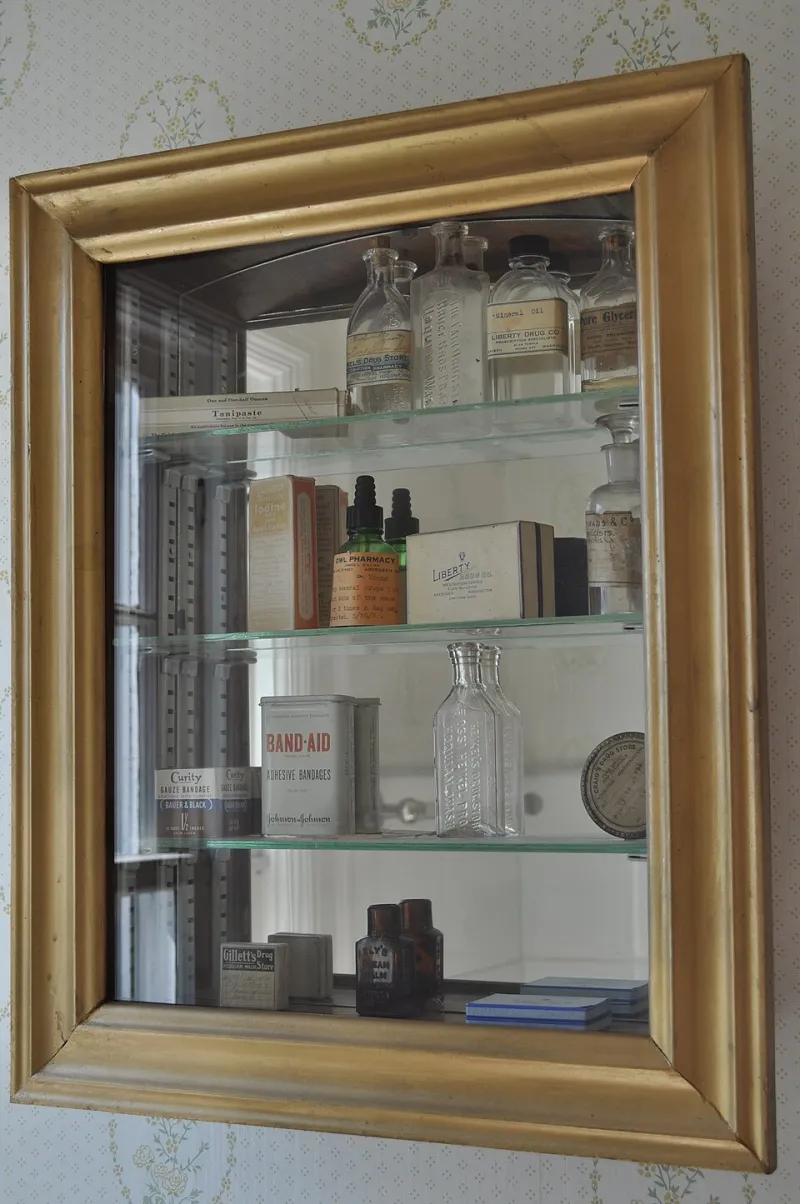
Photo: Joe Mabel, CC BY-SA 3.0, via Wikimedia Commons
The cabinet above the sink in a Garden Grove bathroom is not large. It holds what any cabinet holds: toothpaste, floss, a bottle of ibuprofen, a razor. But push aside the Q-tips and the whole thing becomes a small museum of two medical worlds.
The Shelf Inventory
On the left: a tin of Tiger Balm, a small blue jar of dầu gió, a packet of cao sao vàng, a bag of dried chrysanthemum flowers, a jar of honey with a lemon slice floating in it. On the right: an orange prescription bottle of metformin, a white bottle of lisinopril, a pill organizer with the days of the week in English, a folder of Medicare Part D paperwork. In the back: a Ziploc bag labeled in Vietnamese, sent by a cousin who visited from Vietnam last summer. No one is entirely sure what is in it.
This is the Vietnamese-American medicine cabinet. It is not a rejection of modern medicine. It is not a superstition shelf. It is a working compromise, built one prescription, one balm, and one phone call at a time.
Hot, Cold, and the Language of Illness
Bà Ngoại says she has nóng trong người, heat inside. She says she was trúng gió, hit by wind. She says her body is hàn, cold. These are not random complaints. They are part of a humoral framework that treats health as balance: hot and cold, wind and damp, internal and external. A fever is hot. A postpartum body is cold. A headache can be wind.
The younger generation learns to translate, not to correct. A daughter does not tell her mother that trúng gió is not a diagnosis. She asks what it feels like. She writes it down. At the doctor's office, she says, My mom says her head is heavy and her body is cold. The doctor hears fatigue and chills. The daughter hears her mother.
The Brown-Bag Translation
At an appointment in Dallas, a daughter brings a brown paper bag. It is a ritual familiar to many Vietnamese-American families: the brown-bag review. Inside are all the bottles, jars, and baggies from the cabinet. The doctor looks inside. The daughter explains. This one is for blood pressure. This one is a balm for her knees. This one is a tea for sleep. This one came from Vietnam. We do not know the name in English.
The doctor nods, but the daughter sees the confusion. She asks about interactions. She asks whether the herbal tea affects the blood thinner. The doctor is honest: there is not enough research. The daughter is honest too: her mother will drink it anyway. So they compromise. They agree to separate the tea from the pill by two hours. They agree to watch for bruising.
The Pharmacy Between Two Worlds
In Little Saigon, the pharmacy counter is a border crossing. The pharmacist speaks Vietnamese and English. She knows which insurance plans cover which drugs. She knows that a customer will ask for dầu gió and also for a refill on amlodipine. She knows that the instructions on the bottle say take with food, but the family will also say kiêng, avoid certain foods, because the elder believes the medicine is hot.
The pharmacist does not laugh. She explains. She warns. She calls the doctor when something does not add up. In a system that often asks patients to navigate alone, she is a translator.
What Staying Well Requires
Staying well in a Vietnamese-American family is a part-time job. It means refilling the pillbox on Sunday night. It means calling the insurance company about a denied claim. It means ordering supplements that a relative in Vietnam swears by, then checking the labels when they arrive. It means knowing that the cabinet is not a museum. It is a working shelf.
It also means holding two ideas at once: that modern medicine saves lives, and that inherited remedies carry care. The two do not always agree. The work is not to choose one. The work is to keep both in view, and to ask the right questions.
The cabinet door closes. The bottles are lined up. The balm is within reach. In a house where no one has time to be sick, the small shelf is a quiet form of love.